Engineered Hardwood Flooring in Sarasota, FL for Florida homes
Top-rated Sarasota engineered hardwood flooring installer. Real wood built for Florida humidity — installed in homes, condos, and remodels across Sarasota and surrounding cities.
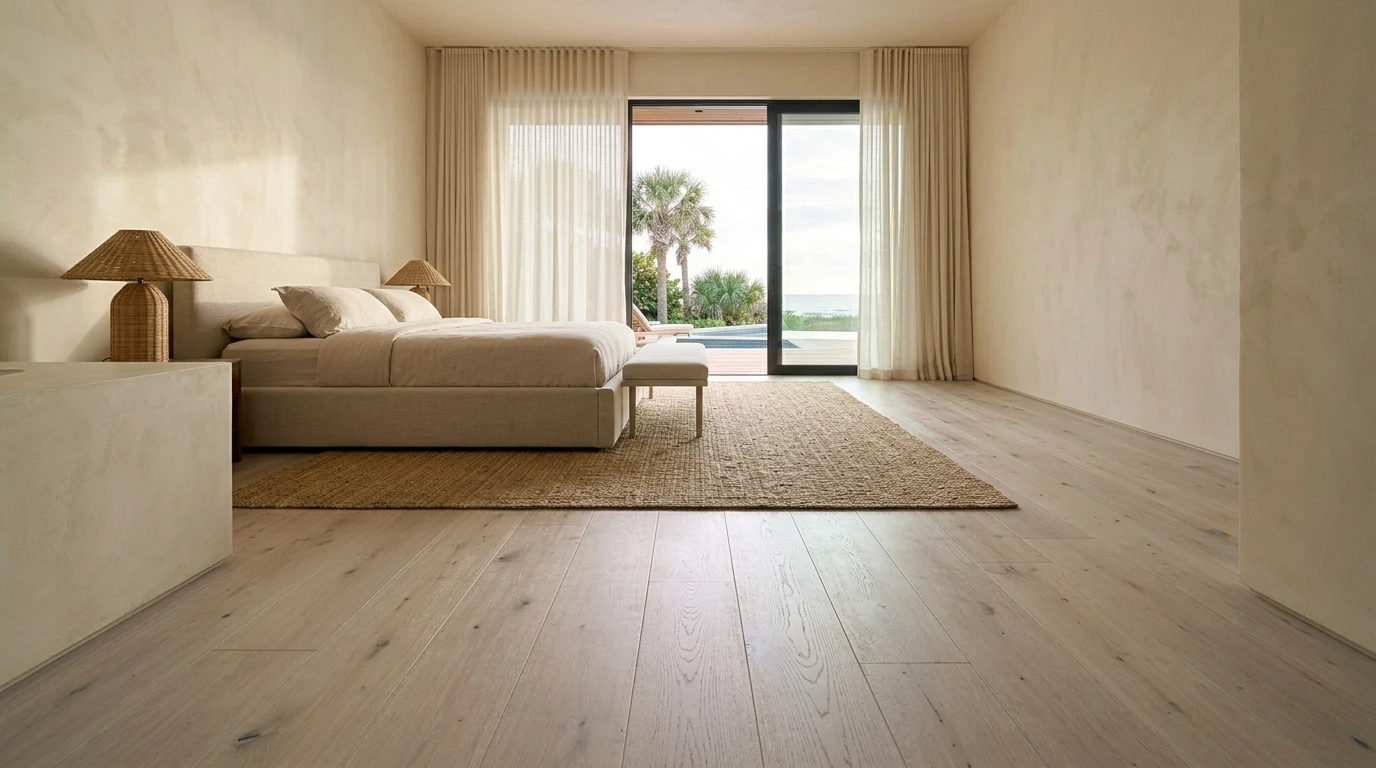
Real wood — built for Florida homes and concrete slabs
Engineered hardwood is a layer of genuine oak, walnut, hickory, or maple bonded to a stable base. The base is what lets it sit on a concrete slab and ride out Florida summers without warping, gapping, or buckling the way solid wood sometimes does.
Comfort Style Flooring installs engineered hardwood three ways — glued directly to the concrete, floating over a quiet pad, or nailed down over a plywood floor. The right method depends on how your house is built, not what's fastest. Every concrete slab gets checked for moisture before we pick an adhesive.
Engineered hardwood is usually the right call when you want hardwood but the floor underneath is concrete or a condo. It isn't always the right call — we'll say so if it isn't.
Check the floor
Concrete slabs get tested for moisture in writing. Plywood floors get checked for squeaks, dips, and loose boards.
Pick the install method
Glued to concrete. Floating with a quiet pad for condos. Nailed to plywood. We pick what your floor needs.
Let the wood settle
Boards sit in the house a few days so they adjust to the air before install. Skipping this is how floors gap later.
Finish the edges
Stair edges, door thresholds, and baseboards done alongside the main floor — not tacked on after.
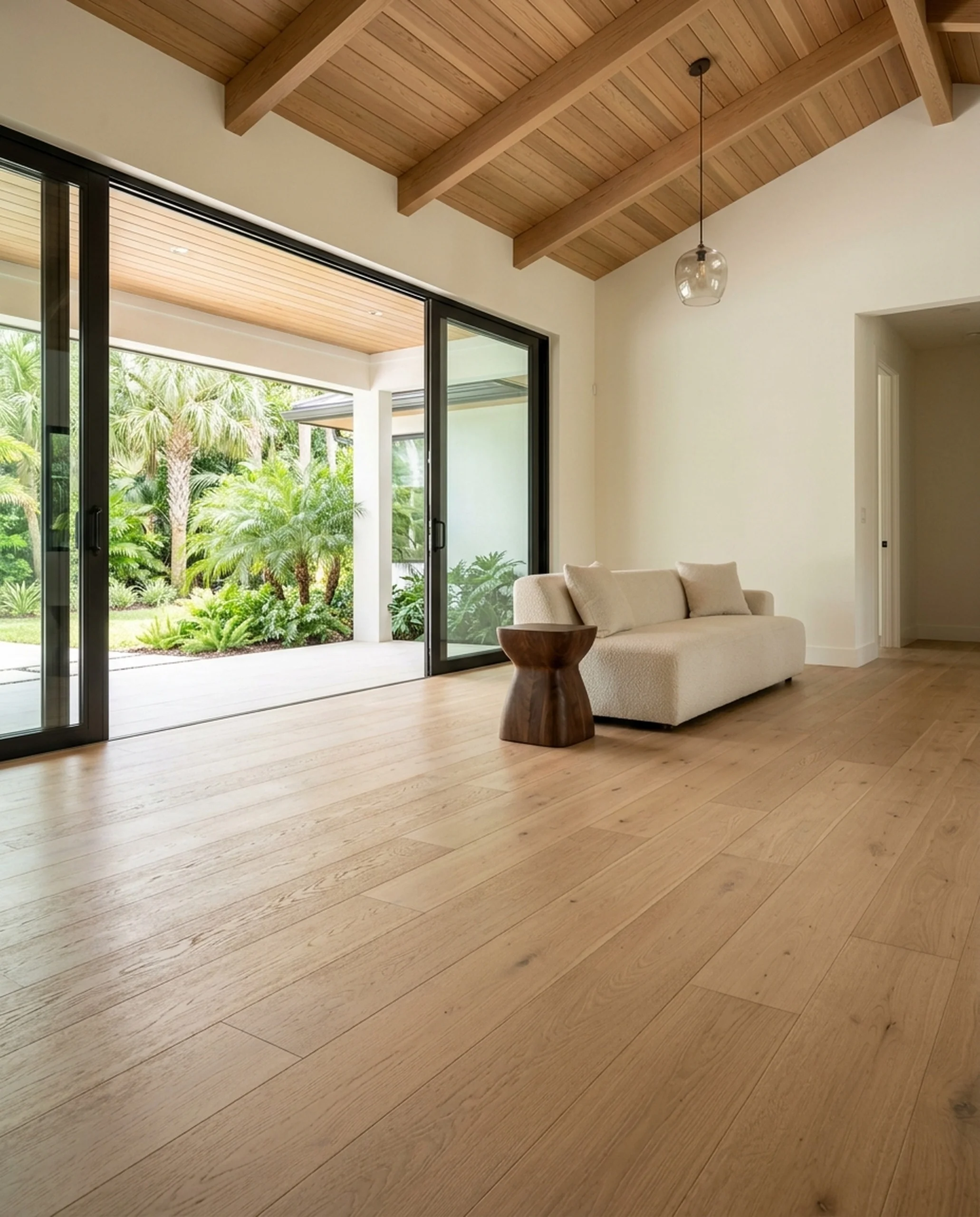
Investment
& what it covers
Entry
- Entry-grade engineered hardwood
- Floating install over a level floor
- Standard transitions and trim
Standard
- Thicker wear layer, proven brands
- Glued or floating — picked for your floor
- Moisture check on concrete included
- Quiet pad for condos
Premium
- Premium European oak, thick wear layer
- Moisture sealant on concrete slabs
- Custom stair edges and transitions
- Can be refinished 2-3 times
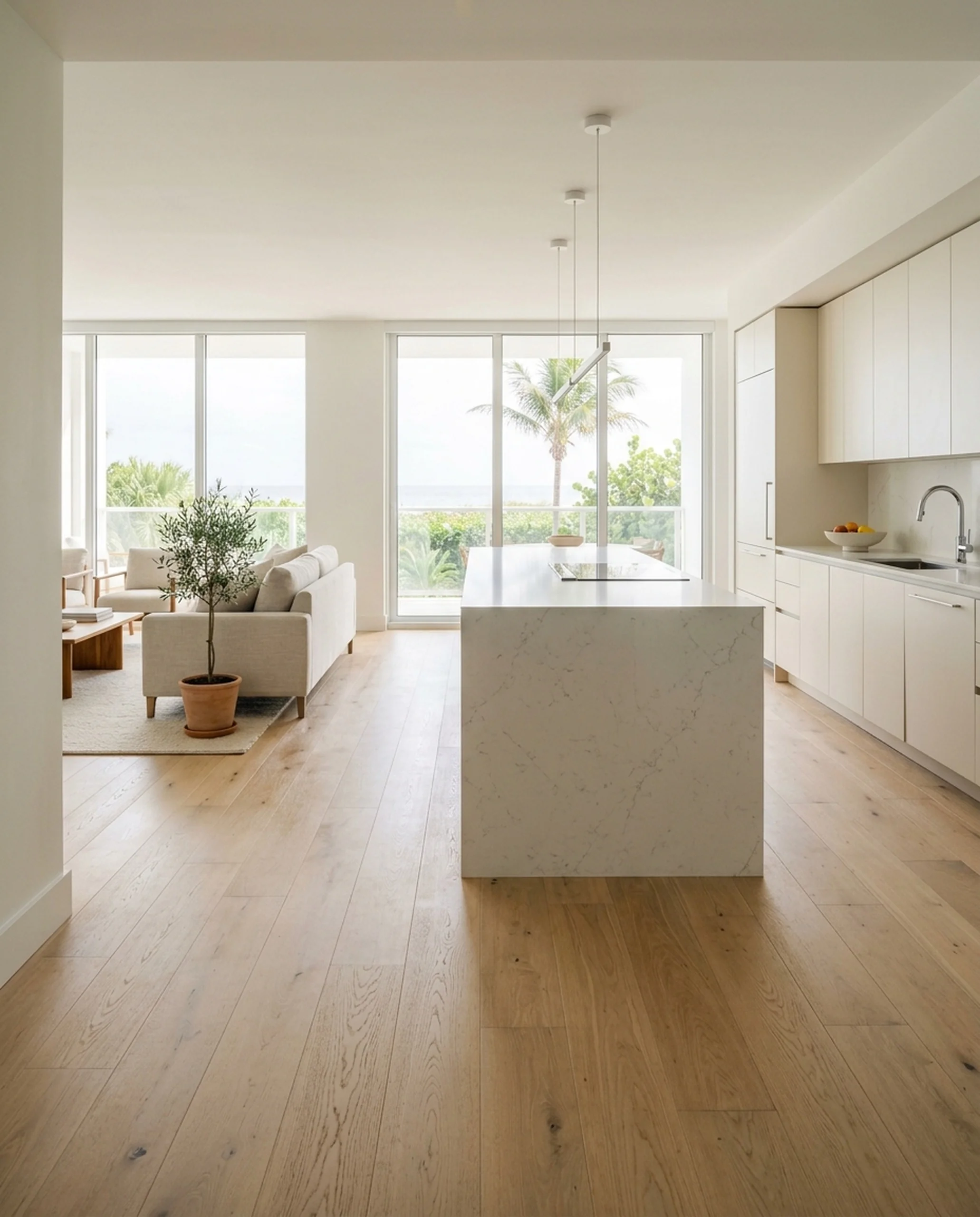
Recent
installations
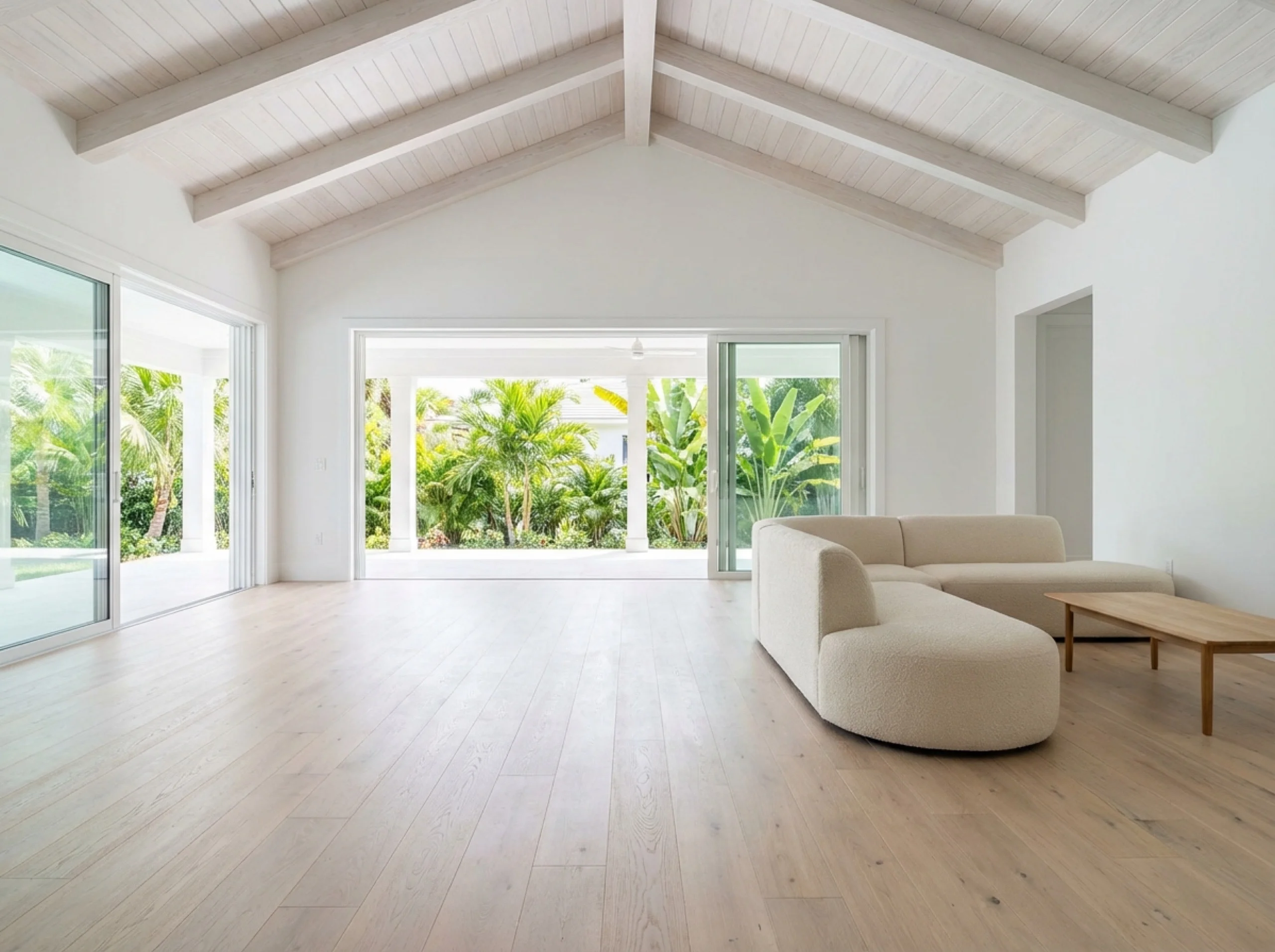
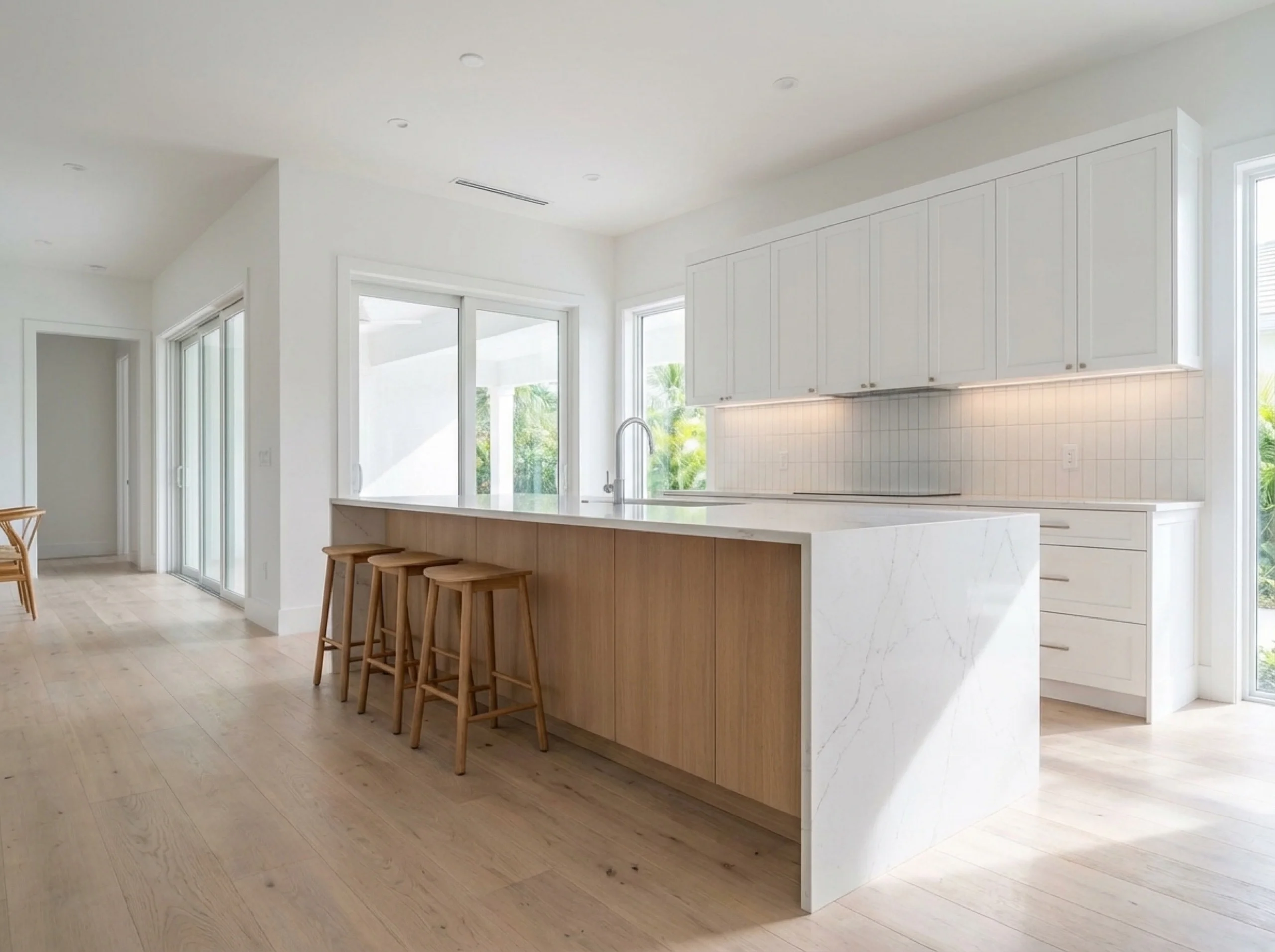
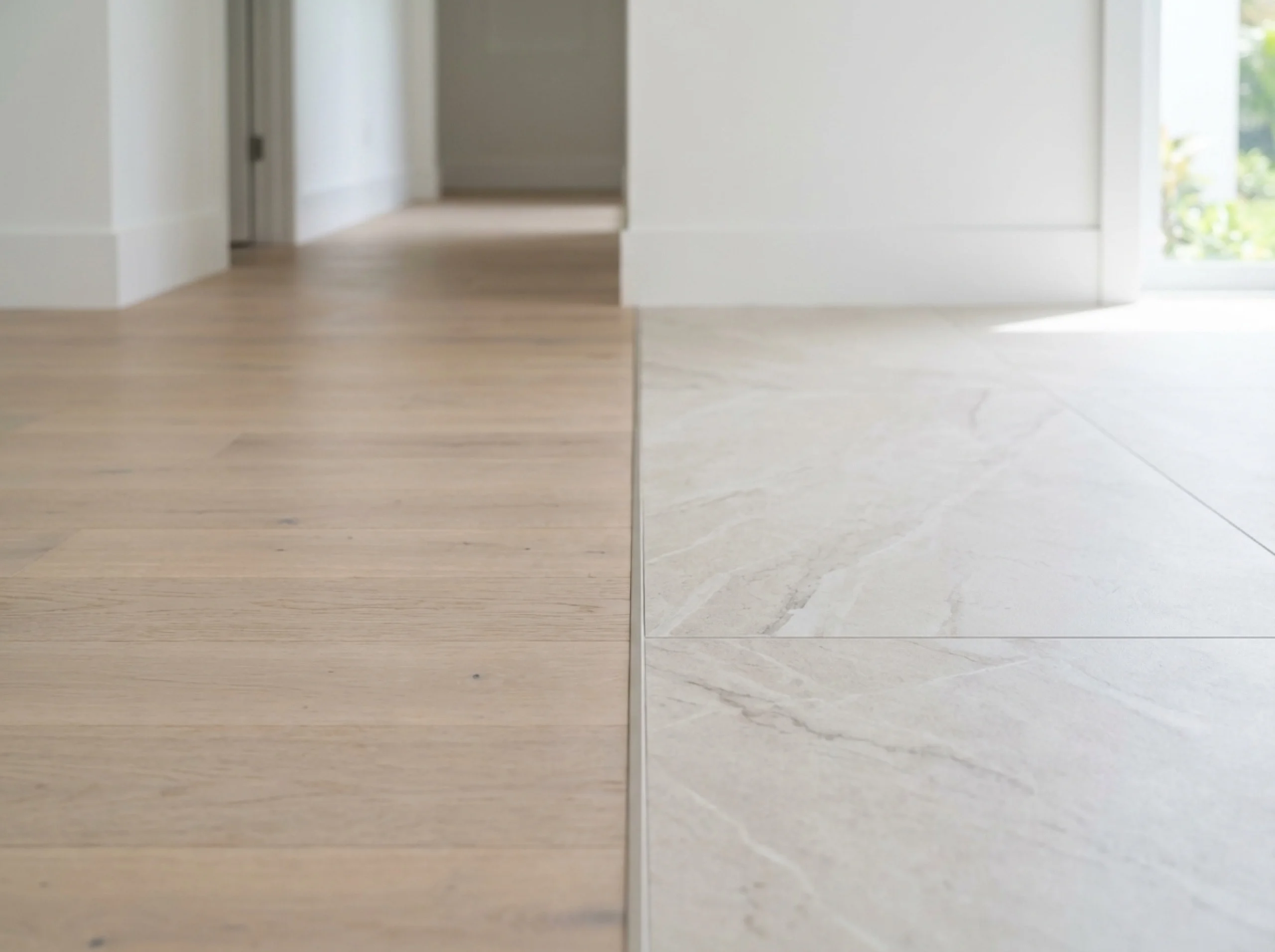
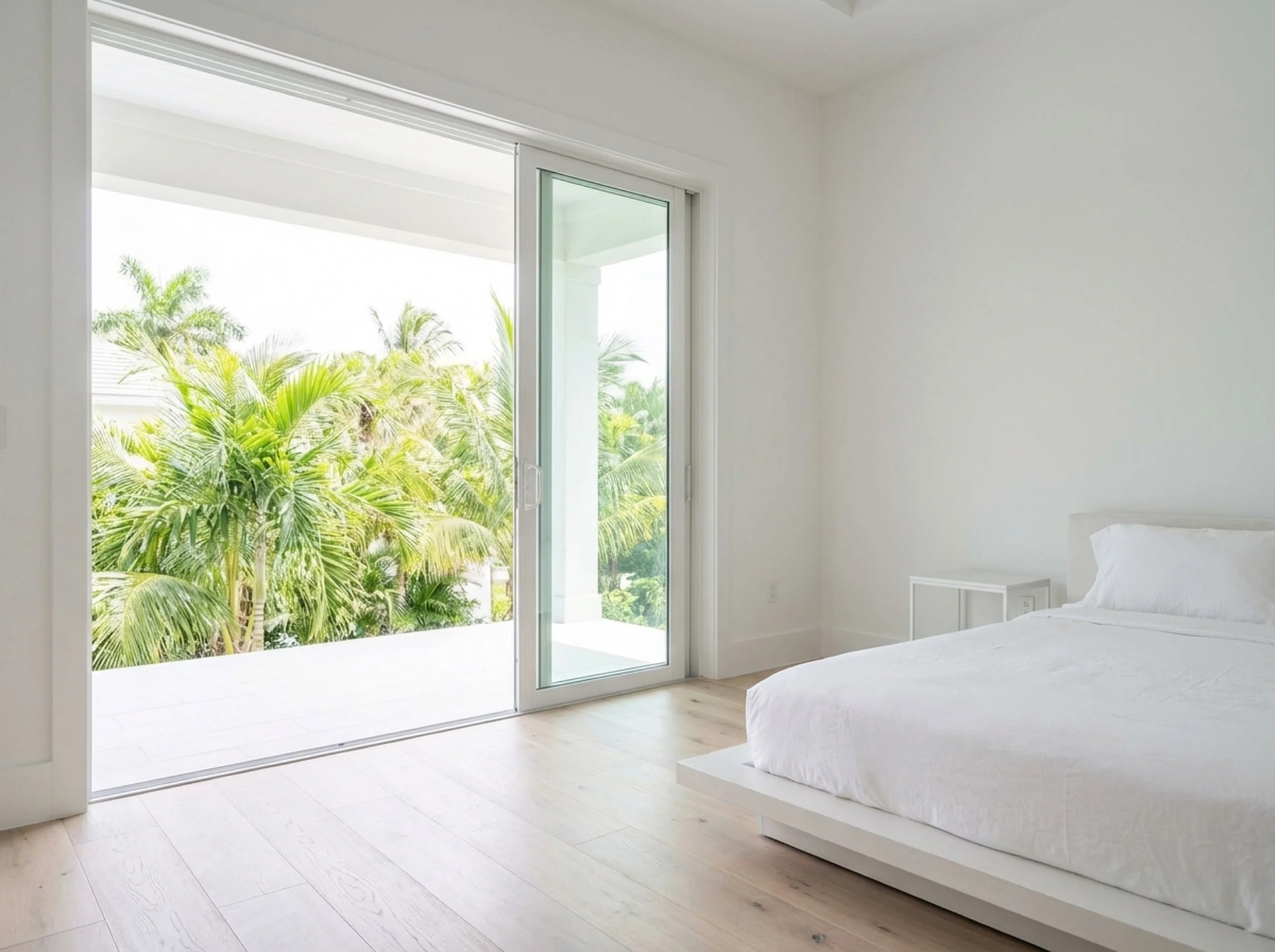
Straight from
the job site
“Their team was efficient and got the job done. No price changes or surprises. Everything was completed as priced and described. Thank you!”
— Frederick Albertine
Available
across the area
We install engineered hardwood in Sarasota, Lakewood Ranch, Longboat Key, Siesta Key, Venice, Anna Maria, Nokomis, Osprey, and University Park.
Common Questions
Engineered hardwood vs LVP — which is better?
If you want a hardwood floor, engineered wins. If you want a floor that shrugs off spills, pets, and bathrooms without a thought, LVP wins.
Engineered hardwood is real wood — it looks and feels like wood because it is. LVP is a printed wear layer over a vinyl base. LVP is fully waterproof. Engineered hardwood is water-resistant at best.
For living rooms, bedrooms, and main hallways where wood and resale value matter, engineered hardwood is usually the better long-term pick. For kitchens, laundry rooms, bathrooms, rentals, and homes with big pets, LVP is the more practical one.
Engineered hardwood vs laminate — what is the difference?
Engineered hardwood has a real wood layer on top. Laminate has a printed picture of wood under a clear plastic layer. One is wood. The other is a very good picture of wood.
Laminate is usually cheaper, resists scratches well, and installs quickly. Engineered hardwood costs more, can sometimes be sanded and refinished if the wood layer is thick enough, and holds more resale value because buyers recognize the difference.
If the budget is tight and the room doesn't need to sell the house, laminate is fine. If you want the floor to feel and look like wood for a decade or more, go engineered.
Engineered hardwood vs solid hardwood — which should I install?
Solid hardwood is one piece of wood, 3/4 inch thick, nailed into a plywood floor. Engineered hardwood is a wood veneer bonded to a stable base that resists humidity and installs over concrete.
Most Florida homes sit on concrete and run the AC hard all summer — conditions that punish solid hardwood. Engineered is the safer wood floor for concrete and humid climates. Solid hardwood still makes sense in older homes with plywood floors over a crawl space, and in custom builds designed around a real-wood floor from day one.
Is there such a thing as waterproof engineered hardwood?
Some brands market engineered hardwood as waterproof, but it's a stretch. A few newer products use a stone-based or sealed core that resists standing water for hours — those are fairly called water-resistant. None of them behave like LVP in a flooded bathroom.
If you need truly waterproof flooring, install LVP or tile. If you want hardwood and need it to handle humidity and minor spills, ask for a sealed-core engineered product and keep it out of wet rooms.
How much does engineered hardwood flooring cost to install?
Our engineered hardwood flooring installation starts at $8 per square foot for a basic floating install. Standard glued or floating engineered with a moisture check and quiet condo pad runs $12 per square foot. Premium wide-plank and European oak with full moisture mitigation goes $18 per square foot and up.
The total depends on the product, the condition of the floor underneath, and whether the concrete needs leveling or moisture work. We price after an in-home walk-through — the prep work is where most of the variation lives.
What is the best engineered hardwood flooring brand?
The brands that hold up consistently in humid climates are Kährs, Mirage, and Somerset. We install them on most jobs because the wood layers hold up, the finishes don't scratch easily, and the warranties pay out when real claims come through.
Best depends on budget and look. A thinner wood layer from a proven brand installed correctly will outlast a thicker layer from a discount brand installed on a bad floor. The installer matters more than the label most of the time.
Can engineered hardwood be installed over a concrete slab?
Yes — this is what engineered hardwood is built for. The concrete has to be flat, tested for moisture, and treated with the right adhesive for the product you picked. Skip that prep and even a premium floor will fail in the first wet season.
Can engineered hardwood be refinished?
Sometimes. Thicker wood layers can usually take one light sand and refinish. Premium wood layers can handle two or three. Thin wood layers can't be refinished and need to be replaced at the end of their life. We check the wood layer thickness before we quote any refinishing work.
Is engineered hardwood a good choice for Florida homes?
In the right rooms, yes. Engineered hardwood holds its shape far better than solid wood does under Florida conditions — which makes it the go-to for concrete-slab homes, condos with sound rules, and any room where humidity swings are normal. When people ask about wood floors in Florida, engineered is almost always the safer starting point.
It's still a wood product. It belongs in living rooms, bedrooms, hallways, and dining rooms — not pool baths, laundry rooms, or homes where the AC goes off for weeks at a time. For those rooms, we install LVP or tile.
Hardwood vs engineered vs laminate — how do I choose?
Solid hardwood for plywood floors and homes with consistent AC where you want the most authentic floor you can get. Engineered hardwood for concrete slabs, condos, and humid climates where you still want hardwood. Laminate for budget-sensitive rooms where a convincing wood look is enough and you don't need to refinish.
Every floor on this list can look great installed well. Every one of them can fail installed poorly. The choice is less about which product is "best" and more about what fits your house and how you live.