Wood Floor Refinishing & Hardwood Floor Repair in Sarasota, FL for Florida homes
Top-rated Sarasota wood floor refinishing contractor. Dustless sanding, scratch repair, damaged-board replacement, and stain color changes on worn hardwood floors.
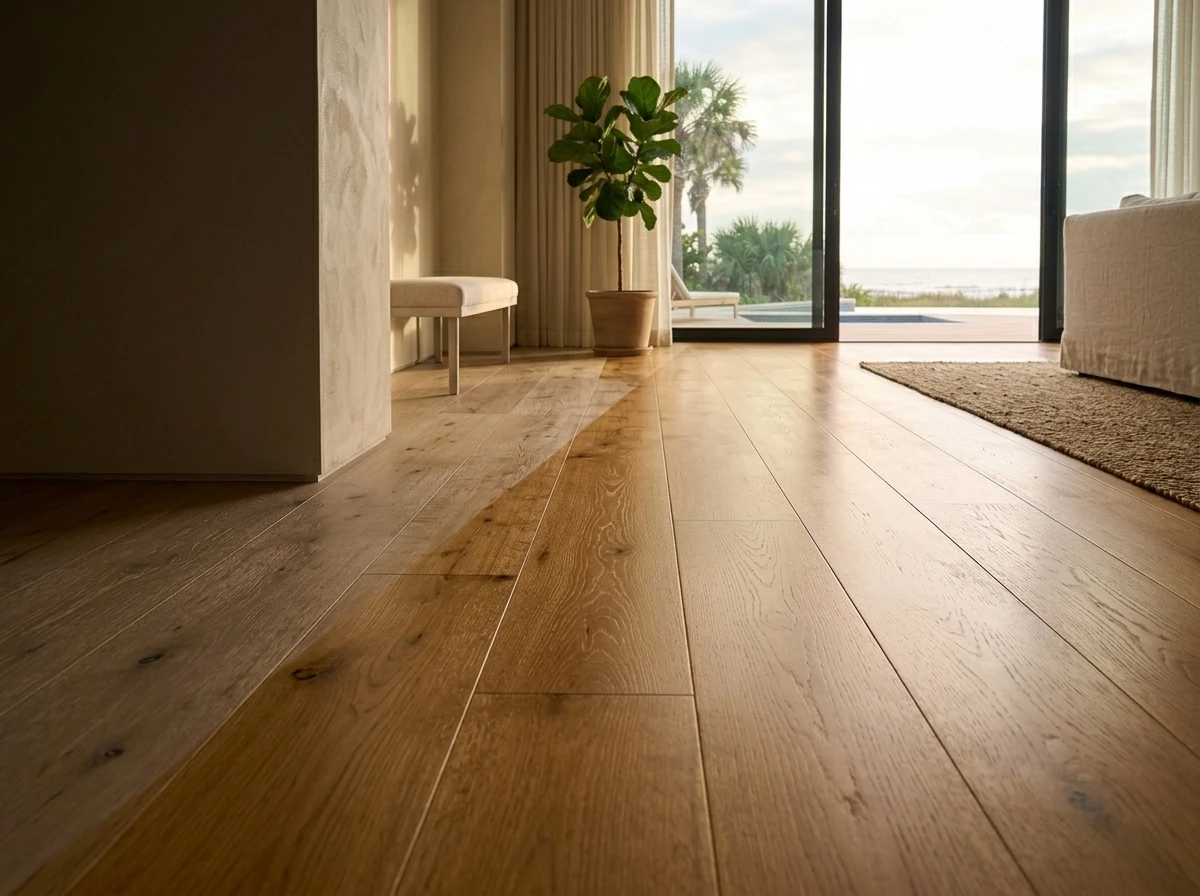
Bring the wood back — don't rip it out
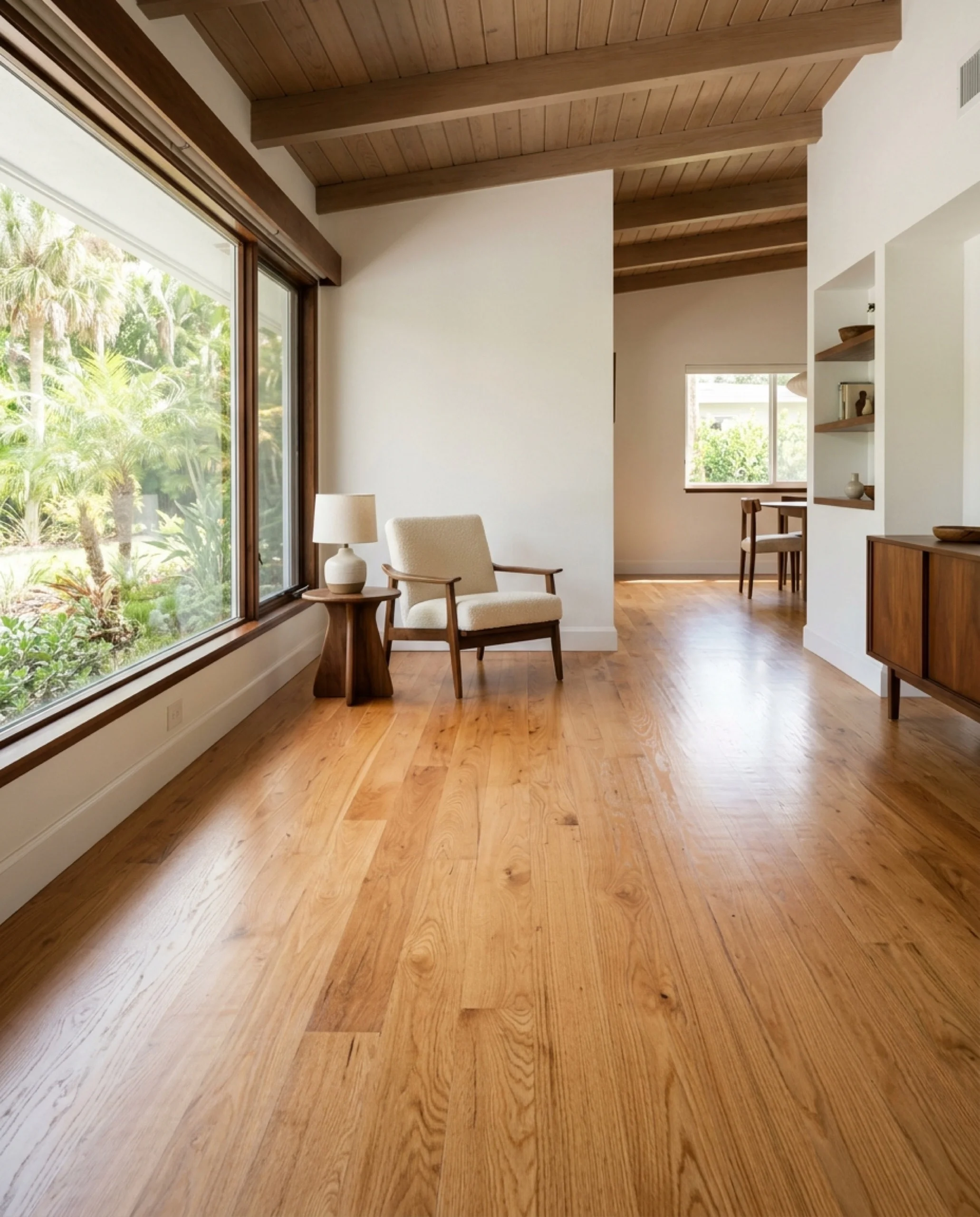
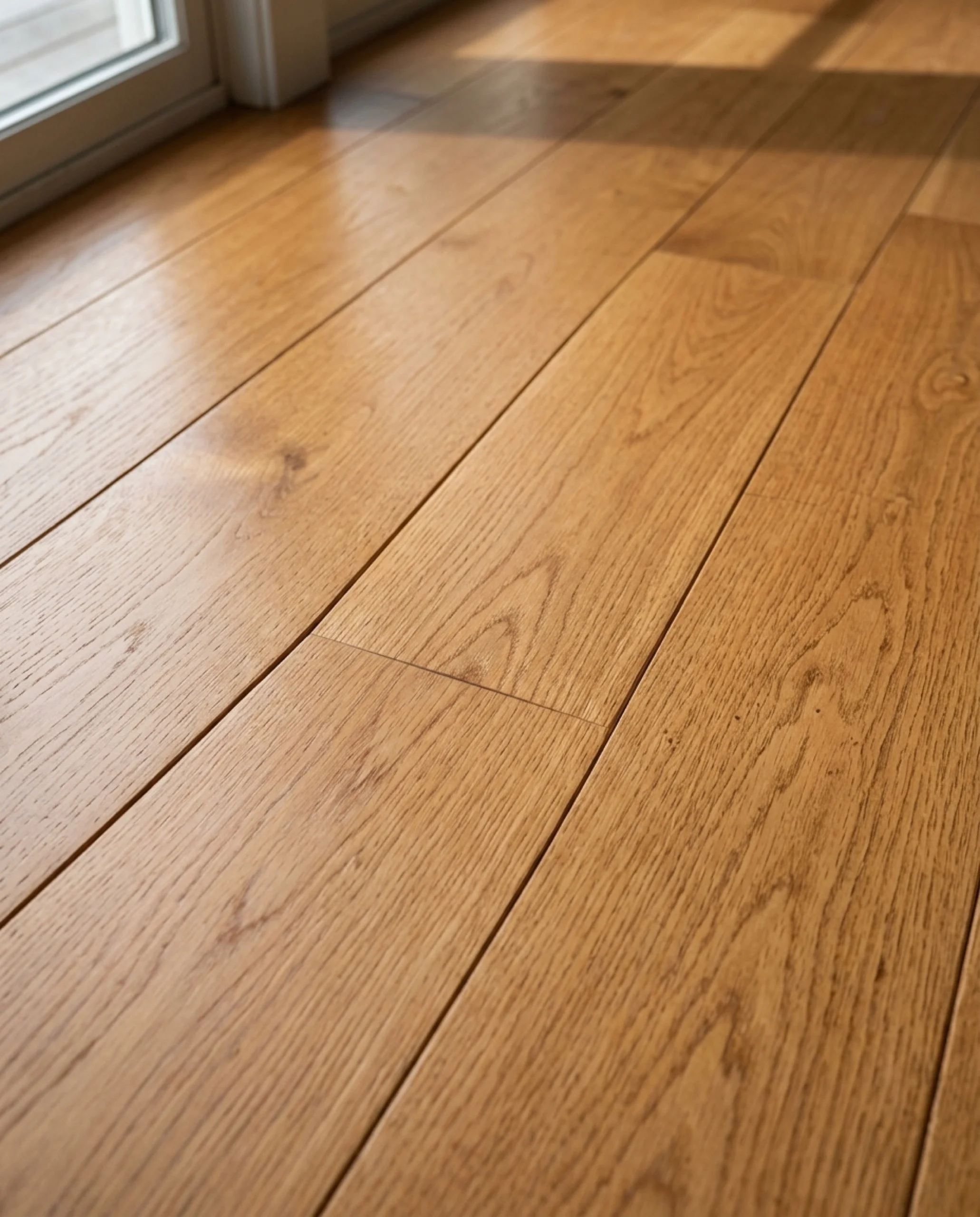
A hardwood floor that looks tired doesn't have to be replaced. Most of the floors we see — scratched, dull, water-stained, worn thin at doorways, noisy underfoot — can be sanded, refinished, and repaired for a fraction of replacement cost. The wood is usually fine. The finish or a few damaged boards are what's failing.
We fix and refinish hardwood floors across Sarasota, Lakewood Ranch, Venice, and Longboat Key. That ranges from swapping a single damaged board to fully restoring an old floor that has survived pets, kids, and a minor flood. Dustless sanding keeps the house livable while we work — 95% of the dust is pulled straight out of the air.
Pricing starts at $2 per square foot for a light refresh of the existing finish, $4.50 per square foot for a full sand and refinish with new stain, and $7 per square foot for full restoration with damaged-board replacement.
Walkthrough
We check the finish, measure scratch depth, look at damaged boards, and do a small test-sand to see how much wood is left.
Repair the damage
Swap damaged boards, fill gouges and gaps, fix squeaks, and check thresholds before any sanding starts.
Sand and stain
Dustless sanding — the sander is connected to a vacuum that catches 95% of the dust. Then stain if you're changing the color, or straight to sealer if the natural wood stays.
Finish and cure
Multiple coats of polyurethane, buffed between coats. You get a written timeline for when furniture and rugs can come back.
Investment
& what it covers
Screen & Recoat
- Light sanding of the existing finish
- Fresh topcoat of polyurethane
- No stain or color change
- Best when the finish is worn but the wood is fine
Sand & Refinish
- Full sand down to raw wood
- Stain change or keep natural
- Multi-coat polyurethane finish
- Dustless sanding included
Full Restoration
- Damaged-board replacement
- Gouge, gap, and water-stain repair
- Full sand, custom stain, and premium finish
- Squeak and transition fixes included
Recent
installations
Straight from
the job site
“Best of the best in Florida. Highly recommend to anyone that's looking to get flooring done. You wont be disappointed with high quality craftsmanship!!!!”
— Bogdan Yakymchuk · Florida
Common Questions
Hardwood floor repair vs refinishing — which do I need?
Repair fixes specific damage. Refinishing renews the entire surface. Most jobs need some of both.
You need repair when the problem is limited to a few spots — cracked boards, a water ring under a plant, a gouge from moving furniture, squeaks in one hallway. We swap boards, fill damage, and blend the finish on that area only.
You need refinishing when the whole floor looks worn — dull finish, fine scratches everywhere, a color that doesn't match anymore. We sand the whole floor back to raw wood and put down new stain and topcoat.
Full restoration is both. Older floors or heavily damaged ones usually need board replacement, scratch and water-stain repair, and a full sand-and-refinish to come out looking right.
How much does it cost to refinish hardwood floors?
Our hardwood refinishing starts at $2 per square foot for a screen-and-recoat — light sanding and a fresh topcoat when the finish is worn but the wood underneath is fine. A full sand and refinish with new stain runs $4.50 per square foot and up. Restoration with damaged-board replacement and repair starts at $7 per square foot.
The cost depends on square footage, how much repair the floor needs, stain color changes, and the finish you pick. We walk the floor before pricing — a screen-and-recoat on a floor that needs a full sand is a waste of money, and the other way around.
How much does hardwood floor repair cost?
Spot repairs usually price by the job, not the square foot. A single board swap with a blended finish typically runs a few hundred dollars. Multiple boards, gouge fills, squeak fixes, and transition repairs get bundled into a flat price after we see the floor.
If the repairs are extensive — say, replacing boards across multiple rooms — it usually makes more sense to bundle the repair into a full refinish or restoration. That way you pay once for the sanding and finishing instead of blending patches into the old floor.
What is dustless sanding and is it really dust-free?
Dustless sanding means the sander is connected to a vacuum that pulls dust off the floor as it gets cut — instead of letting it hang in the air and settle on every surface in the house.
Is it literally dust-free? No. A small amount of fine dust still escapes. But about 95% of the dust gets pulled out of the air. You can live in the house while we sand. Your clothes, your AC filter, and the tops of your cabinets will stay clean.
Can water-damaged hardwood be repaired or does it need replacement?
Depends on how deep the damage went. Surface stains — a dark ring, a warped board that dried back out — can usually be sanded and refinished. The water hit the finish, not the wood itself.
Deeper damage — boards that buckled, stayed swollen, separated from the floor underneath, or grew mold — needs board replacement at a minimum, and sometimes repair to the floor underneath before new boards go down. We can almost always save more of the floor than homeowners expect. We'll also tell you straight when a room is past the point of repair and needs replacement.
How long does hardwood floor refinishing take?
For a typical home, plan on three to five days on-site. Day one is prep and initial sand. Days two and three are fine sanding, stain, and first coats. Day four or five is final coats.
After we leave, the finish needs time to cure. Light foot traffic is fine after 24 hours. You can move furniture back after about a week. Rugs should stay off for two to three weeks so the finish can fully harden. We put the cure timeline in writing so you're not guessing.
Can engineered hardwood be refinished?
Sometimes. It comes down to the wood layer on top of the stable base. A thicker wood layer can usually take one light sand and refinish. Premium layers can handle two or three.
Thin wood layers can't be sanded without cutting into the base underneath. For those, a light recoat is the only option — and if the wood layer is gone, the floor needs replacement. We check the wood layer before we quote any engineered-hardwood refinishing.
Should I refinish my floors or replace them?
Refinish when the wood is solid. If the boards are in good shape, haven't been sanded down too many times, and the damage is mostly surface-level — refinishing is cheaper, faster, and keeps the original character of the floor.
Replace when the wood is past saving. Boards that are thin from repeated sanding, extensive water or termite damage, or a floor you don't like the look of anymore — those are replacement jobs. In between, there's restoration: repair and refinish together for floors worth saving but too damaged for a straight refinish.