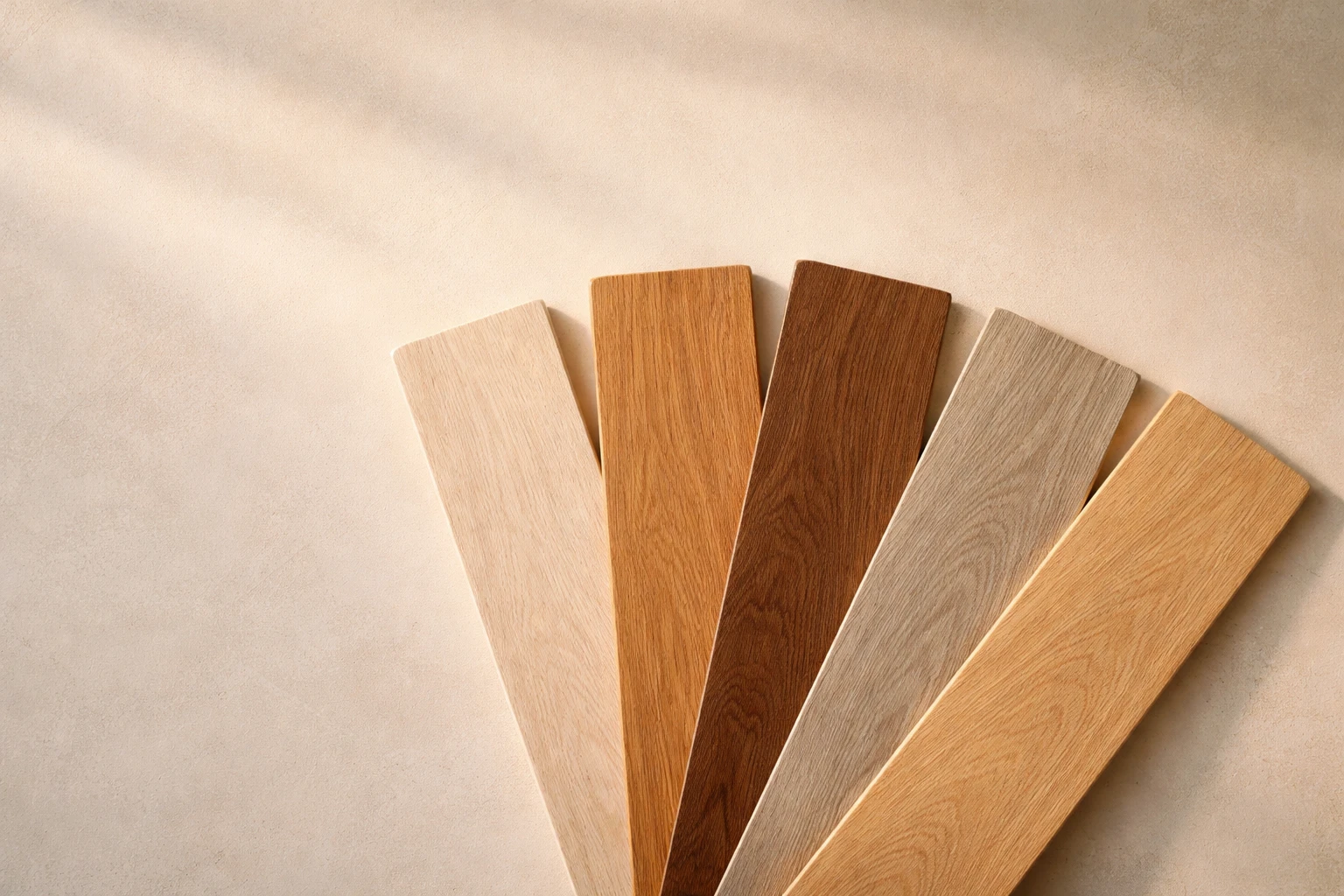
When Sarasota homeowners ask about flooring brands, the honest answer is: there is no universal winner. The flooring brands that work well in one home may be the wrong call in another. A brand can have strong documentation, clear warranty language, and good product fit for one use case while still being the wrong choice for another. The useful question is not “What is the best brand?” It is “Which brands make sense for this room, this house, and this level of moisture risk?”
What homeowners should know
For solid and engineered wood, Bruce and Somerset are useful benchmarks because their installation documents are direct about jobsite conditions, moisture testing, and where solid wood belongs. Mirage is a strong premium reference for maintenance and finish care. Kährs is useful when comparing engineered-wood stability, because its product positioning clearly leans into multi-layer construction.
For LVP, Shaw Floorté Pro, COREtec, and Mannington’s ADURA APEX line all offer useful documentation. The value is not just the product itself. It is the fact that their instructions spell out moisture limits, flatness rules, expansion space, and the limits of “waterproof” language. Mannington is especially helpful for coastal education because its exclusions discuss flood-type events and water entry through sliding-glass doors.
For laminate, Pergo and Mohawk RevWood are practical references because homeowners already recognize the names and the documentation is clear enough to compare climate-control and moisture requirements.
Why the right brand for Sarasota depends on the home, not the rankings
Brand choice only helps if it matches the house. In a barrier-island property with flood history or seasonal vacancy, a glamorous wood brand may still be the wrong answer. In a well-conditioned inland home, a carefully selected engineered wood line may be perfectly reasonable. On the coast, homeowners also need to care about sunlight, sand, and maintenance habits, not just wear-layer marketing.
That is why brand comparisons in this market should focus on three things: how the brand defines acceptable conditions, how realistic its care rules are, and how clearly it explains exclusions.
What to look for / ask / avoid
When comparing brands, ask:
- Does the installation guide clearly state temperature and humidity ranges?
- Are slab-moisture and flatness requirements easy to find?
- Does the care guide prohibit steam mops, waxes, or certain cleaners?
- Are flood, leak, and humidity exclusions clearly stated?
- Can you easily confirm dealer or retailer access for the exact product?
Avoid online rankings that pretend brand alone determines performance. Two homeowners can buy the same respected brand and get very different results because one house was tested and conditioned properly and the other was not.
Common mistakes or contractor shortcuts
A common mistake is treating dealer prestige or internet reputation as proof of suitability. Another is comparing brands without reading the actual installation guide for the specific product line. A third is assuming a premium price means the product is more tolerant of bad prep or poor humidity control. It usually does not.
There is also a local shortcut: using a coastal lifestyle story to sell one category without discussing tradeoffs. Good brands still have limits, and the limits matter more in Longboat Key, Siesta Key, and seasonal homes than they do in a generic national ranking article.
Bottom line
Good flooring brands are the ones that fit the room and state their limits clearly. Bruce, Somerset, Mirage, and Kährs are useful wood references for hardwood floor installation. Shaw Floorté Pro, COREtec, and Mannington are useful LVP references for luxury vinyl plank installation. Pergo and Mohawk RevWood are solid laminate references for laminate flooring installation. The better shortlist is usually two or three products that fit the house, not a search for a single champion.