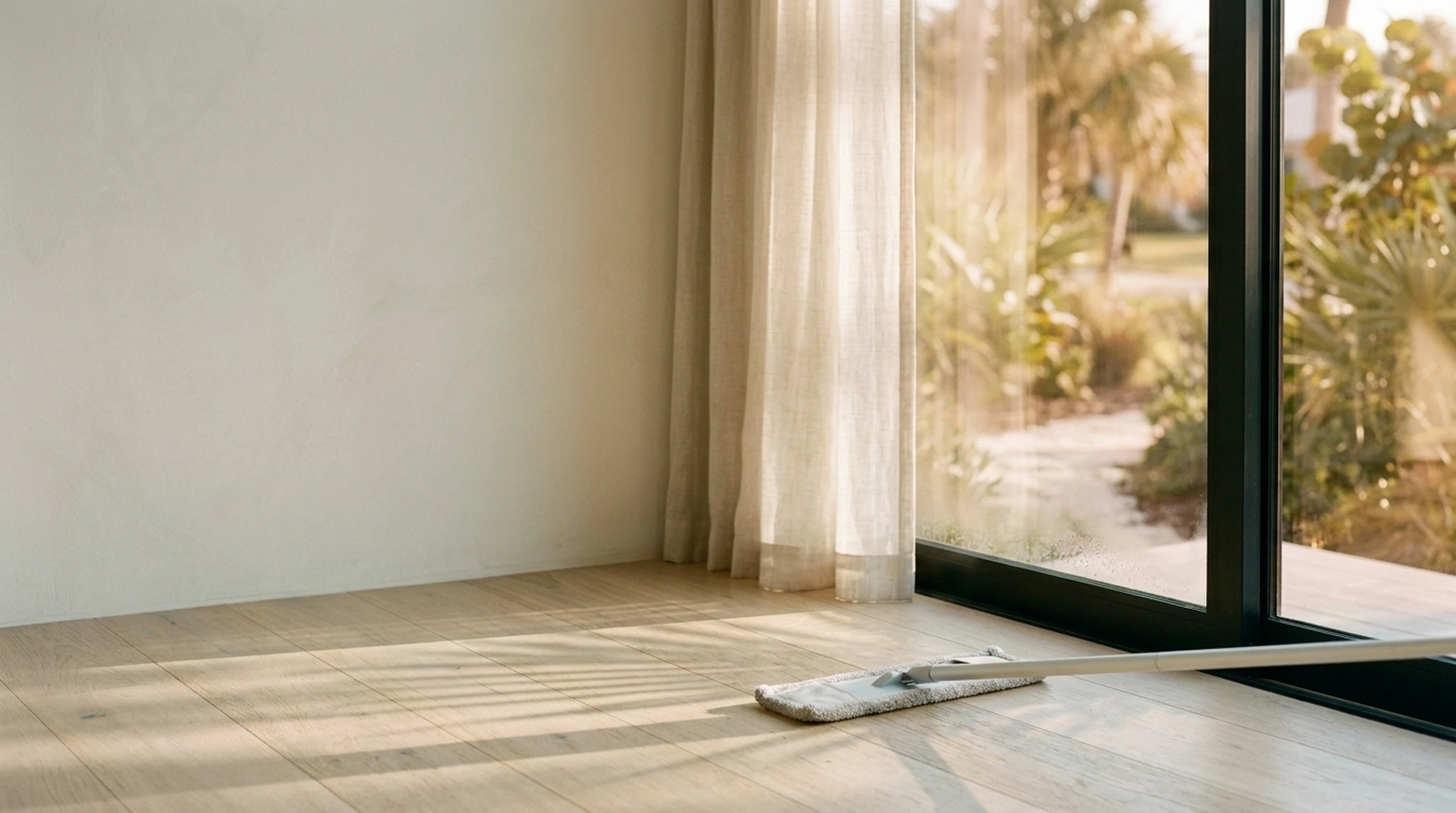
In this market, floor care is usually less about fancy products and more about controlling grit, moisture, sunlight, and vacancy conditions. Beach sand can scratch finishes. Wet feet and pool traffic can stress seams and edges. Strong sun can heat and fade areas near sliders. The best maintenance plan is simple and consistent.
What homeowners should know
Manufacturers across wood, laminate, and LVP categories repeat a few core rules. Use walk-off mats. Remove abrasive grit quickly. Clean with products approved for that floor. Avoid wet mopping methods that leave standing moisture. Several brands also warn against steam mops, waxes, polishing products, or harsh cleaners.
That matters because local wear is often mechanical before it is structural. Bruce warns about sand as an abrasive. COREtec, Mohawk RevWood, and Mirage all give practical care restrictions that point in the same direction: less grit, less standing moisture, gentler cleaners, and better routine habits.
Why beach sand and pool traffic make floor care different here
Homes near the beach deal with sand almost every day. On Longboat Key and Siesta Key, that can act like fine sandpaper on finishes if it is left on the floor. In pool homes, wet traffic near entries and lanais adds another layer of stress. Large southern and western glass can also warm certain areas of the floor more than homeowners expect.
Seasonal occupancy matters too. UF/IFAS and Florida Solar Energy Center guidance both support keeping vacant Florida homes clean, dry, and under proper humidity control. Floor care is not just what you wipe on the surface. It is also how the house is managed while nobody is there.
What to look for / ask / avoid
A practical local care routine usually includes:
- Mats at exterior doors and from garage to house
- Quick removal of sand and grit with a soft broom, dust mop, or suitable vacuum setting
- Immediate cleanup of standing water near sliders, pet bowls, and pool entries
- Shades or UV management in rooms with strong sun
- Approved cleaners only
Avoid steam cleaning unless the manufacturer explicitly allows it. Avoid waxes or shine-restoring products that leave residue. Avoid using an upright vacuum with the brush roll on where the care guide warns against it — the spinning bristles can scratch finishes.
Common mistakes or contractor shortcuts
One mistake is assuming that a waterproof floor needs almost no care. The surface may resist spills, but the joints, trim, and subfloor still benefit from dry habits. Another is using whatever cleaner is already under the sink. Care guides are often specific for a reason. A third is ignoring the house while away. A floor in a seasonal home can be “cared for” poorly even when nobody touches it, simply because humidity control was weak.
A softer mistake is forgetting about sunlight. Some color change in wood is natural, and heat buildup near large sliders can also stress the floor. That is not a defect if the manuals warned about it.
Bottom line
Good floor care in Sarasota-area homes is mostly about small habits repeated consistently: keep grit off the surface, keep water from lingering, use the right cleaner, manage sun exposure, and keep seasonal homes dry enough while vacant. That routine usually does more for floor life than any miracle cleaner. If you’re considering new floors, see what a proper hardwood floor installation in Sarasota looks like from the start — installation choices affect how easy the floor is to maintain for years afterward.