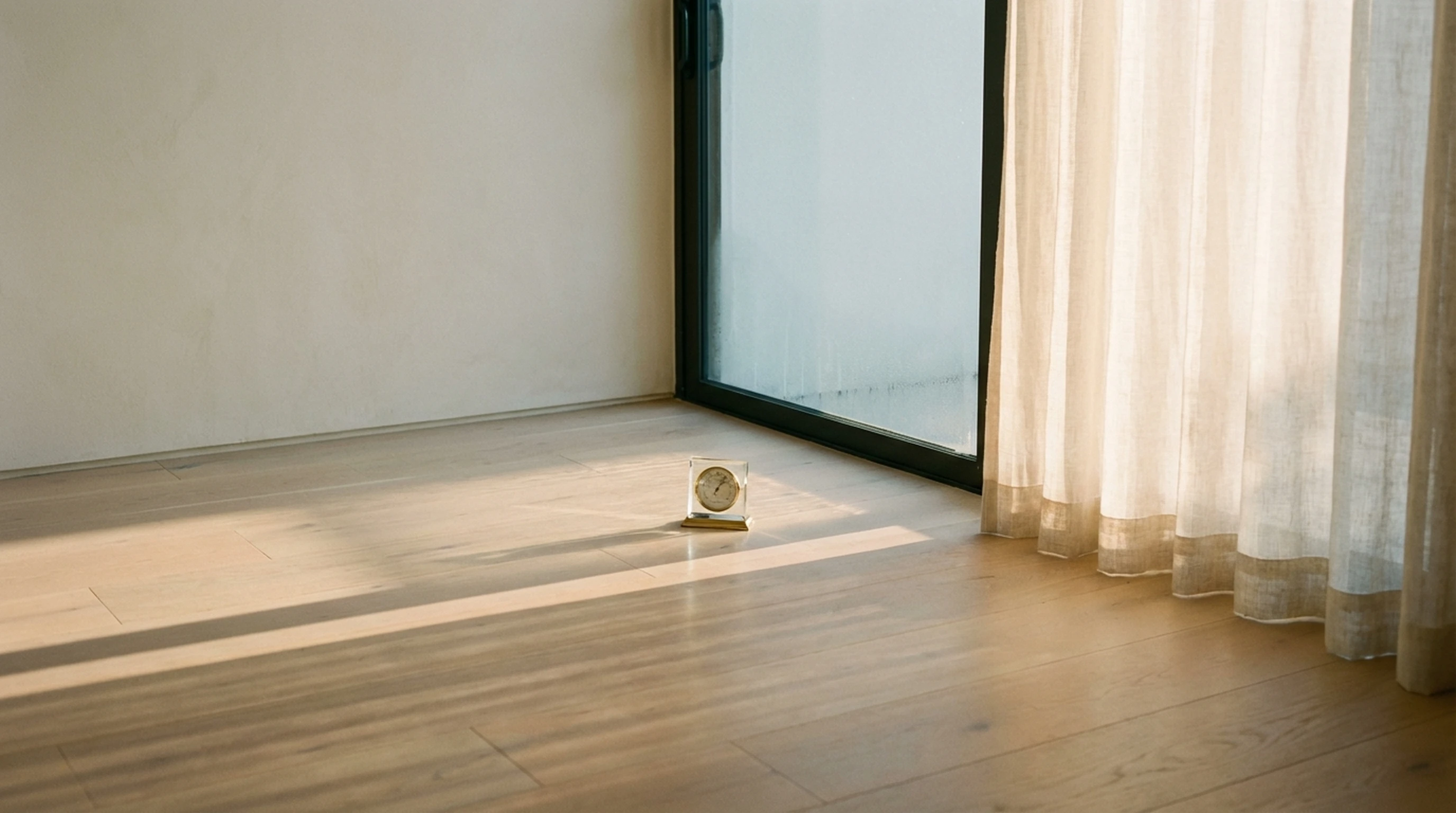
Humidity affects flooring by changing how much moisture materials absorb and release. In practice, that means wood can swell, shrink, cup, or gap when indoor conditions swing too far, and laminate can also react badly to repeated moisture stress. The main issue is not that Sarasota is humid. The issue is whether the home stays within a stable indoor range year-round, including the months when nobody is there.
What homeowners should know
For wood floors, relative humidity is the number that matters most. Florida wood floors — solid hardwood and engineered hardwood alike — depend on a stable indoor environment more than any other variable. NWFA and manufacturer guidance repeatedly tie performance to controlled indoor temperature and humidity, not to the outdoor weather report. Bruce and Somerset both call for steady interior conditions before and after installation. Mohawk’s RevWood laminate guide also requires climate-controlled interiors.
Acclimation means letting flooring adjust to the home’s expected living conditions before installation. It does not mean dropping boxes in a damp house and hoping for the best. The house should already be at the target temperature and humidity, and wet trades should be done.
When indoor moisture swings too high or too low, wood flooring can move. Cupping means the plank edges rise higher than the center. Buckling means the floor lifts enough to pull away from the subfloor or push upward. Gaps can also open when the material dries out more than expected. None of those problems are explained well by “Florida humidity” alone. They usually point to site conditions, moisture imbalance, or both.
Why Florida humidity wrecks unprepared floors
This region has many seasonal homes. UF/IFAS warns that vacant Florida homes are more vulnerable to mildew and moisture-related problems if they are not kept clean and dry. Florida Solar Energy Center work on vacant homes found that high thermostat settings without proper humidity control often performed poorly, and recommended keeping relative humidity below 70 percent all the time and below 65 percent most of the time.
That matters because many owners leave for the summer and assume the house is “fine” as long as the AC is set high. For flooring, that can be a costly assumption. A Longboat Key or Siesta Key home left warm and humid through summer has a different risk profile from a full-time occupied home in Lakewood Ranch with stable indoor conditions.
What to look for / ask / avoid
Ask the installer or seller these questions:
- What indoor temperature and humidity range does this product require?
- Will the house be conditioned to that range before the material arrives?
- How will the home be managed during seasonal vacancy?
- Are humidity-related exclusions spelled out in the warranty?
Avoid vague reassurance. “This floor is made for Florida” is not a substitute for actual indoor-condition requirements. Also avoid treating engineered wood as immune to moisture. It is usually more stable than solid hardwood, but it still depends on indoor control.
Common mistakes or contractor shortcuts
A common shortcut is using acclimation as a magic word while ignoring the condition of the house itself. Another is installing before drywall, paint, or other wet work is truly finished. A third is recommending wood to a seasonal homeowner without asking how the house will be conditioned in July, August, and September.
For vacant homes, fan settings matter too. FSEC’s work found that running the fan continuously can make humidity control worse in some setups. Floors do better when the whole humidity plan is thought through instead of reduced to a single thermostat number.
Bottom line
Humidity affects flooring through indoor stability, not through a generic idea of Florida weather. A well-conditioned Sarasota-area home can support wood floors nicely. A seasonal home with weak humidity control can stress wood and laminate fast. Before choosing material, decide how the house will actually be managed when it is occupied and when it is empty.
Wood floors in Florida face unique challenges that homeowners in drier climates never encounter. Florida wood floors — whether solid hardwood, engineered hardwood, or laminate — respond to the constant push and pull of humidity that defines the Sarasota-area climate. Understanding these conditions before choosing a material is what separates a floor that performs from one that disappoints.
If you’re weighing whether wood floors in Florida are the right fit for your home, the answer usually starts with how the house is managed — not the material itself.